
In Japan, September is designated as Disaster Preparedness Month.
Because the country frequently experiences natural disasters such as earthquakes and typhoons, this is an important time to review your emergency preparedness.
At Free Wave Co., Ltd., we send out disaster-preparedness messages to our foreign staff and talents to help ensure that everyone can live safely and with peace of mind in Japan.
Whether you’ve lived in Japan for a long time or have just recently arrived, we encourage you to take this opportunity to review your own disaster-preparedness measures.

Evacuation and Emergency Supplies
In the event of a major disaster, roads and utilities (electricity, water, gas) may be cut off, and it could take about three days (72 hours) before rescue or relief supplies reach you.
That’s why it’s recommended to keep at least three days’ worth of emergency supplies — ideally, enough for one week.
In Japan, it’s common practice to prepare an “Emergency Bag” (防災バッグ) in advance.
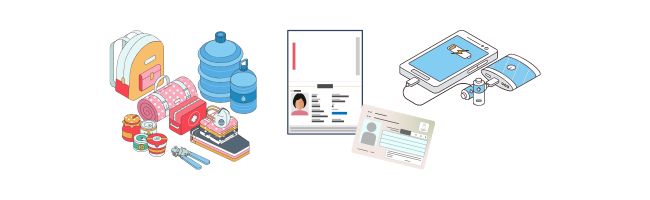
Use the checklist below as a reference and adjust it based on your household’s needs.
・Emergency food (shelf-stable meals such as pouches, canned food, nutrition bars – at least 3 days’ worth)
・Portable toilets (for at least 3 days)
・Flashlight with spare batteries
・Power bank(with charging cables)
・First aid kit and personal medications
・Valuables (cash, copies of IDs and health insurance card (pluralized for clarity)
・Emergency blanket (aluminum sheet)
・Masks, hand sanitizer, and hygiene supplies
・Whistle
・Portable radio (battery-operated or hand-crank)
・Work gloves, towels, wet wipes
・Disposable heating pads (kairo)
・Plastic sheets or tarps
・Plastic bags (for trash, toilet use, or waterproofing)
・Waterless shampoo and dental care items
・Comfort food or snacks (candy, chocolate, etc.)
・Notebook and pen
・Spare glasses or contact lens supplies
・Special items for children, elderly family members, or pets★Consider dietary needs: halal, vegetarian, or allergy-safe food.
Extra Tips
・Keep a copy of your passport, residence card, and some cash in you Emergency Bag.
If evacuation is necessary, always bring your identification documents.
In case digital payments or credit cards are unavailable, small amounts of cash and coins can be very useful.Avoid carrying large sums for safety reasons.
・Agree on communication methods with family and friends (phone, LINE, WhatsApp,etc.).
During a large-scale disaster, communication apps may not work properly, and phone calls may be disrupted.
Decide on a meeting point in advance, and practice using public payphones — they often still work during power outages.
・Download multilingual disaster apps for real-time alerts.
TV and radio broadcasts during emergencies are usually in Japanese.
If you’re not fluent, multilingual apps can help you quickly access accurate information.
See the links below for useful tools and websites.
Learn More & Download Multilingual Apps
The information in this URL could be useful for you.
Safefty tips:https://www.jnto.go.jp/
Japan Meteorological Agency:https://www.jma.go.jp/
NHK BOSAI:https://www3.nhk.or.jp/
防災情報 全国避難所ガイド:https://www.hinanjyo.
Final Reminder
Disasters can happen at any time.
Even if everything seems fine now, being prepared can help protect you and your loved ones.
Take a few minutes this September to check your emergency bag and confirm your evacuation routes.
“Stay safe, stay prepared” — a small step today can make a big difference tomorrow.
At Free Wave, we are committed to creating an environment where all our talents — Japanese and international alike — can work and live safely.
We will continue to share information and resources to help everyone stay safe and prepared throughout the year.